Atikaki's Song
An essay on the Canadian wilderness and the Gardener

Behind me, the sound of heavy breathing and wet swimsuits grow. Just a little faster. My ten-year old legs lengthen to reach first one rocky step and then the other. On my left, the rocks angle down to the lake, fifteen feet below. Bare feet slap the smooth granite. Each step is perfectly placed. Each step has a slightly different sound as the ground changes and slants. I leap from a small rock across the three-foot dip in the ground.
Step, step, jump. And I win.
Another victory over my two younger brothers who are only two steps behind. Each time I go this way, I count my steps, strategically placing each one. I grin as I try to quiet my breathing. Running back to the cabin always makes me feel like a deer gracefully floating over fences and trees.
A trail of water on the wood floor indicates the adventure we just had. There is nothing like jumping into the lake in mid-May when the ice has only just retreated. It is always a competition between us and the water. Who will surrender first? The three wet swimsuits hanging on the deck fly as a white flag.
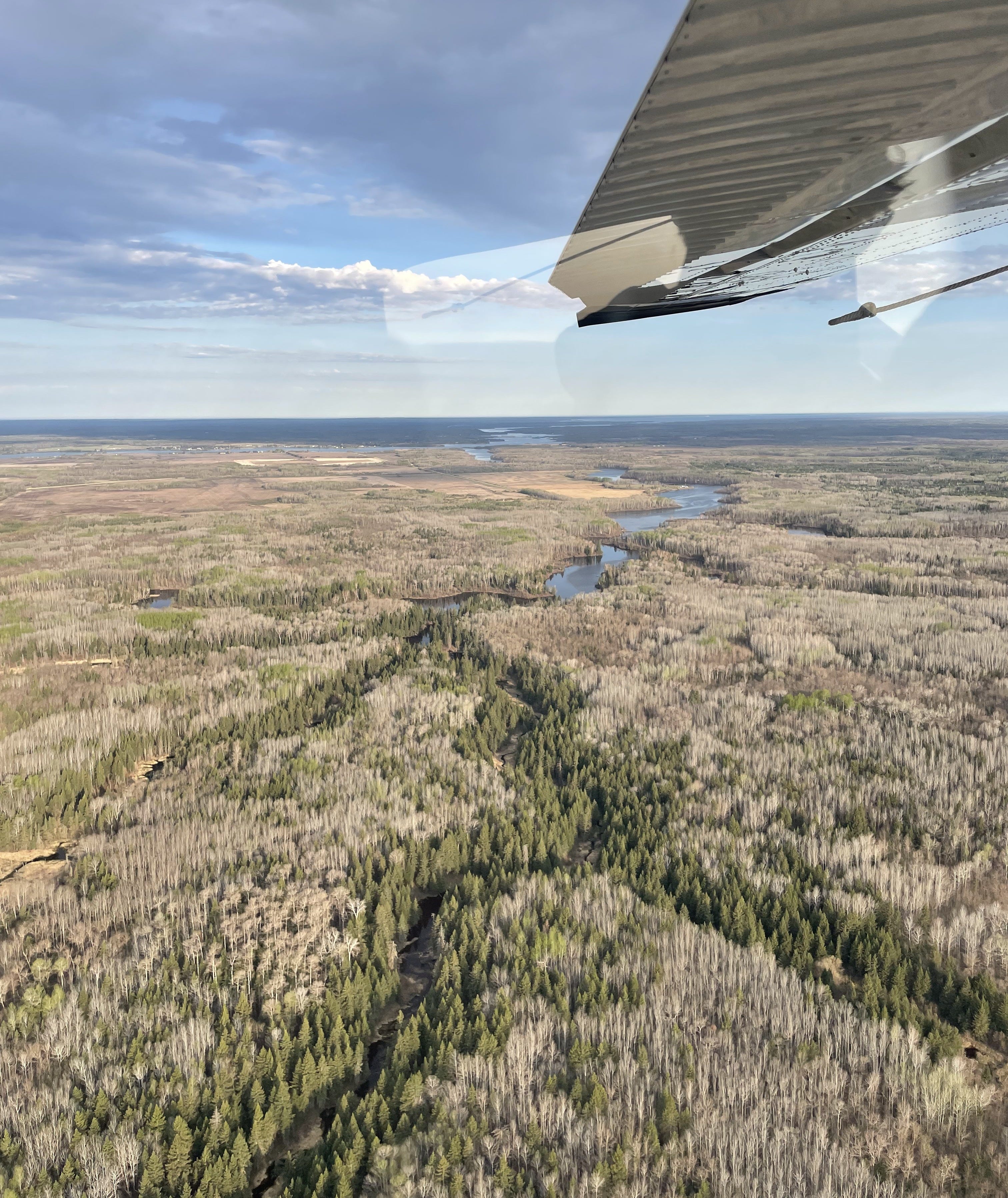
A faint buzz rises above the sound of the generator. I look toward the dock as an Otter—a nine-seater float plane that is “the workhorse of the north”—arrives with a load of new guests. Days like these are my only physical contact with the outside world. I’ve spent most of every summer here at Dogskin, a small fishing lodge in the middle of Atikaki provincial park. Here, where the nearest road is fifty miles away, and the nearest civilization is a Native American reserve.
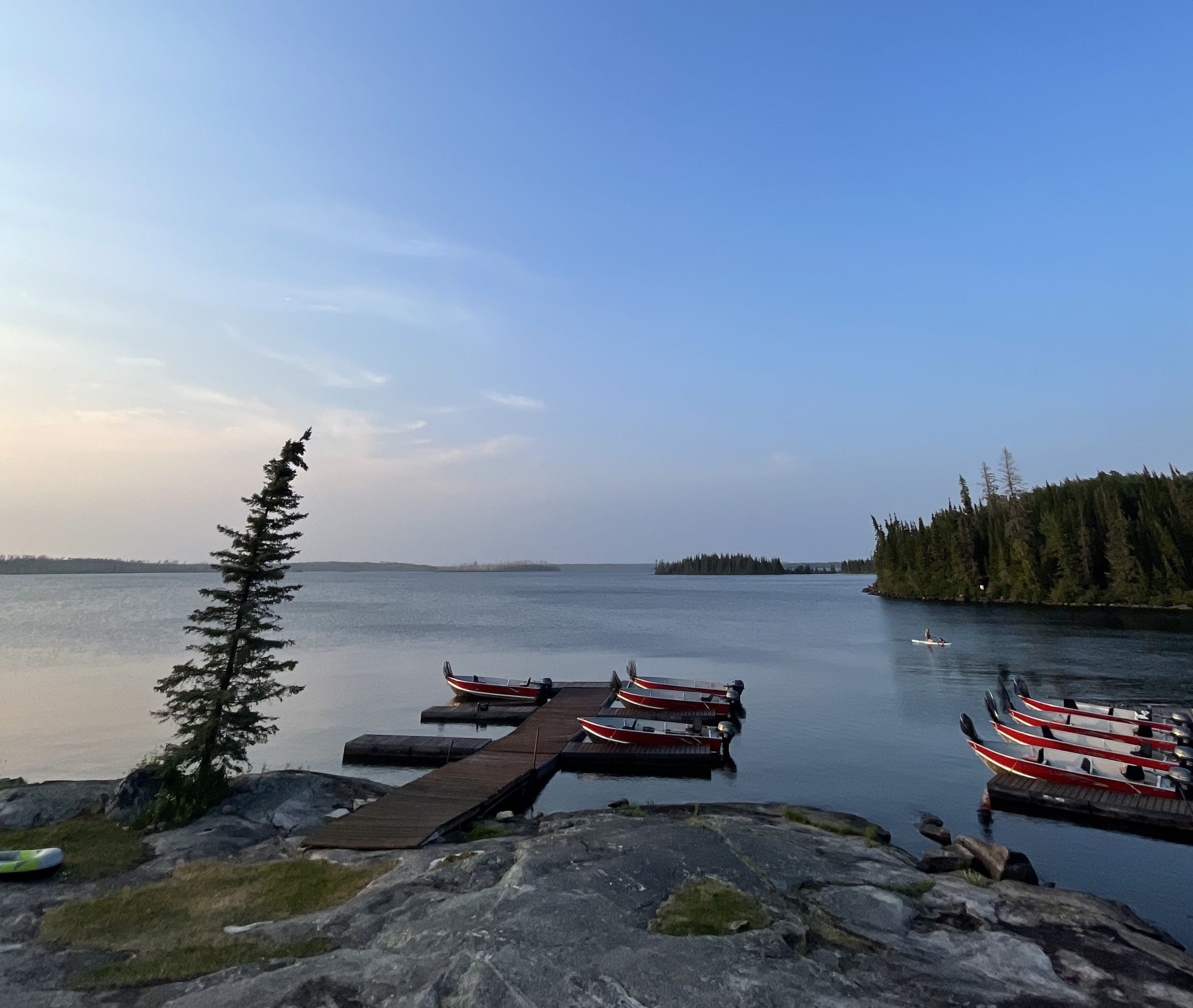
At what moment my relationship with this wilderness changed, I could not tell you. It was slow, then sudden. At first, the wilderness was just my playground. I was more interested in the people that came to visit this wild home of mine. But even as a child, the land gripped me. When I was out on the boat, I would sit in the front at the stern and watch the land, the water, the sky—everything as it passed us. The boats were small, only fourteen or sixteen feet long, and the motors didn’t go very fast. The lake system is spread out, so traveling to some of the distant portions of the lake took over an hour. I relished this time to enjoy the beauty of the land. I must have been a sight, perched on the front step, holding tightly to the edge, not a word to anyone, which was unlike me. Sometimes I would sing. I imagined the wind catching my song and burying it in the oncoming waves, treasuring its gift. I sang what I heard the land say. Mostly melodies but sometimes words. Some melodies still remind me of that land. I wonder why.
As I grew, the enchantment of the wilderness grew dim. I became distracted with growing up. My time was spent reading books about other places, playing games with other teens that visited, or calling my friends in the one room of the lodge that had working wifi. I was old enough to go out on the boat by myself but I hesitated, afraid to be alone. So I turned away from the land. I still swam in the lake, read outside on the dock, and went fishing, but with others.
The year I turned sixteen, I decided to stay at the lodge all summer to work. My dad and my uncle both own the business, so they would switch who stayed on the island every few weeks. This was the first time I was up there without my family. I stayed in a small cabin by myself. The staff was nice but they were older and disliked having the owner’s daughter live so close to them, to see what they did late at night. It was the worst kind of loneliness, it was loneliness amongst people.
I pushed myself to jump into the boat and go, despite my fear. What’s up ahead is better, I reasoned. If I had not taken this invitation, the loneliness of the island would have swallowed me whole, leaving behind only my body. My spirit needed the quiet, and my mind, like a mustang freshly caught, followed unwillingly.
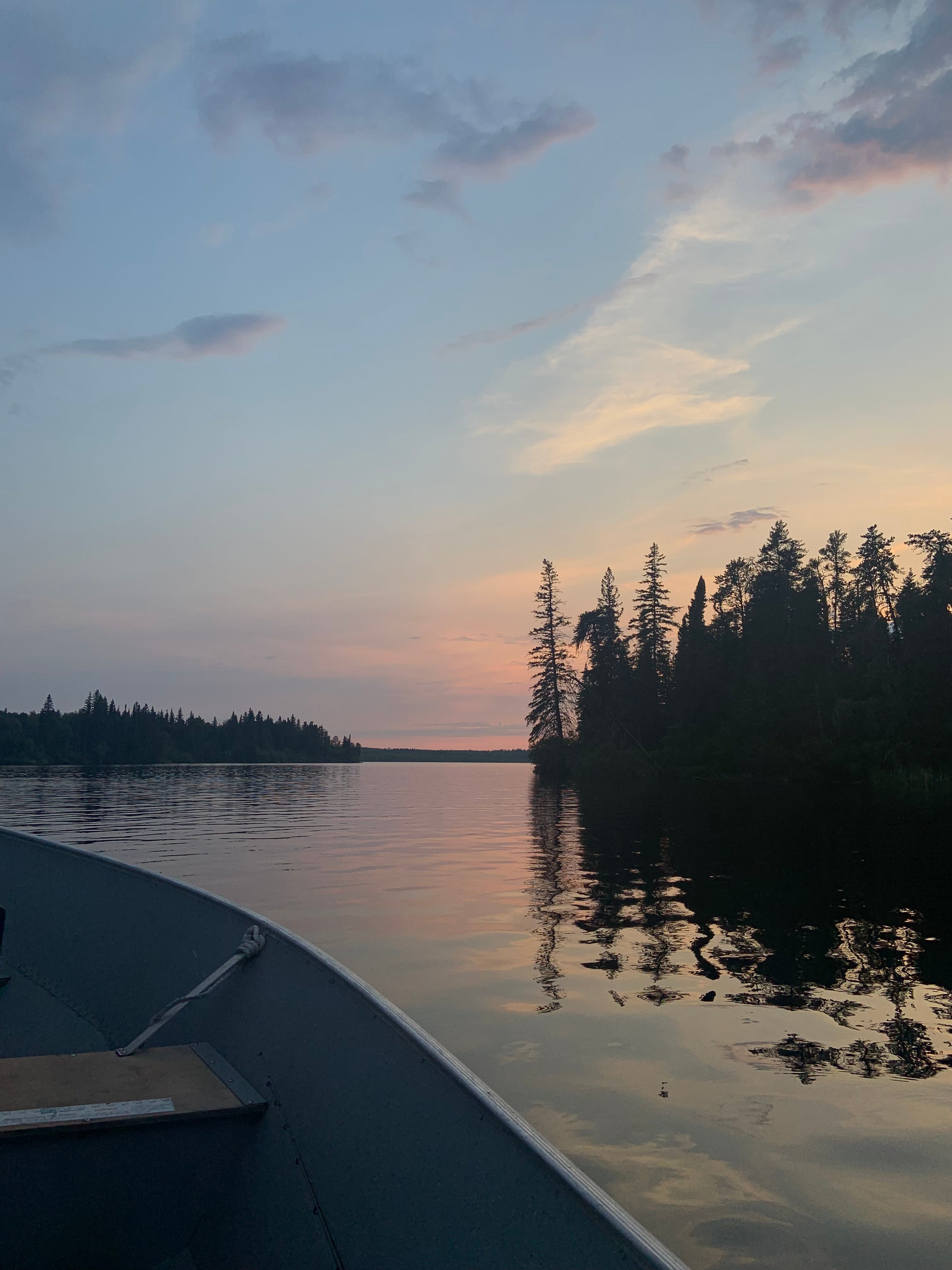
The clear sky had been tainted with orange, pink, and yellow, like a paintbrush touching a wet canvas. Color spread everywhere in the sky, dripping down into the glassy water. Like small trees springing from barren land after a wildfire, clouds sparsely populated the air directly above. A dark green treeline surrounded the lake. This would be my escape. I pulled the cord of the motor one, two, three times and it thrummed with life. I reached for the dock and unlatched both ropes that held the fishing boat from drifting away. Sitting down, I motored slowly away from the island, away from loneliness to be alone. Both prospects terrified me, but better to choose to be alone than be forced to. I’m not sure if the logic worked but it appealed to my pride. The lake parted for me as I sped up.
Curious, it is that humans seek to escape life, the busyness, and the noise, by going somewhere quiet and creating more noise. Perhaps it is a longing for controlled interaction. Fear of an immersive experience with something uncontrollable might keep the music playing, the boat running idly, and a few lifejackets clipped tightly on, just in case—just in case nature became too wild. My mind jumped to guests that visited the lodge. Some came from cities and brought their children. They were careful to wear their life jackets, careful to take every precaution to be safe. But I knew there was nothing safe about this place. It wasn’t a park in a city, where humans could choose how much of nature they wished to interact with, keeping the good parts and leaving out whatever they deemed “unsafe”. No, this was no city park. The braver you were here, the significantly more dangerous it became. One fall, one motor that didn’t start, one bear, one slip of a knife, and you were stranded. That’s the beauty and terror of the remoteness of it. You are quick to call it heaven until something happens.
In the quiet, there was another hill, the quieting of my own appetites. I put my own rambunctious thoughts to death but, stubborn as I was, I had a funeral for them each time. I ignored my mind telling me to think, and I jumped off the cliff made from my distracted thoughts and into the dark, cold, tea-tinted water below. I gasped as I hit the surface—familiar but catching me off guard. The rush, the impact of the water, and its presence, that was familiar. The water itself was always a new mercy.
The wilderness scared me because it was desolate and lonely. But still, I ran to her for friendship, I ran to her for comfort—as a plea for God to make Himself known to me.
As I sat in the stillness of the wild, tendrils of Him began to burrow deeper in me. It was not specific words or revelations that rooted Him and that place in me. It was every sunset, each splash of the aurora, the songs carried on the breath of wolves, the beds of green and gray moss, and the fish leaping from their world of water to the dangerous air above. An intimate relationship began to unfold the more time I spent letting the wilderness speak for itself.
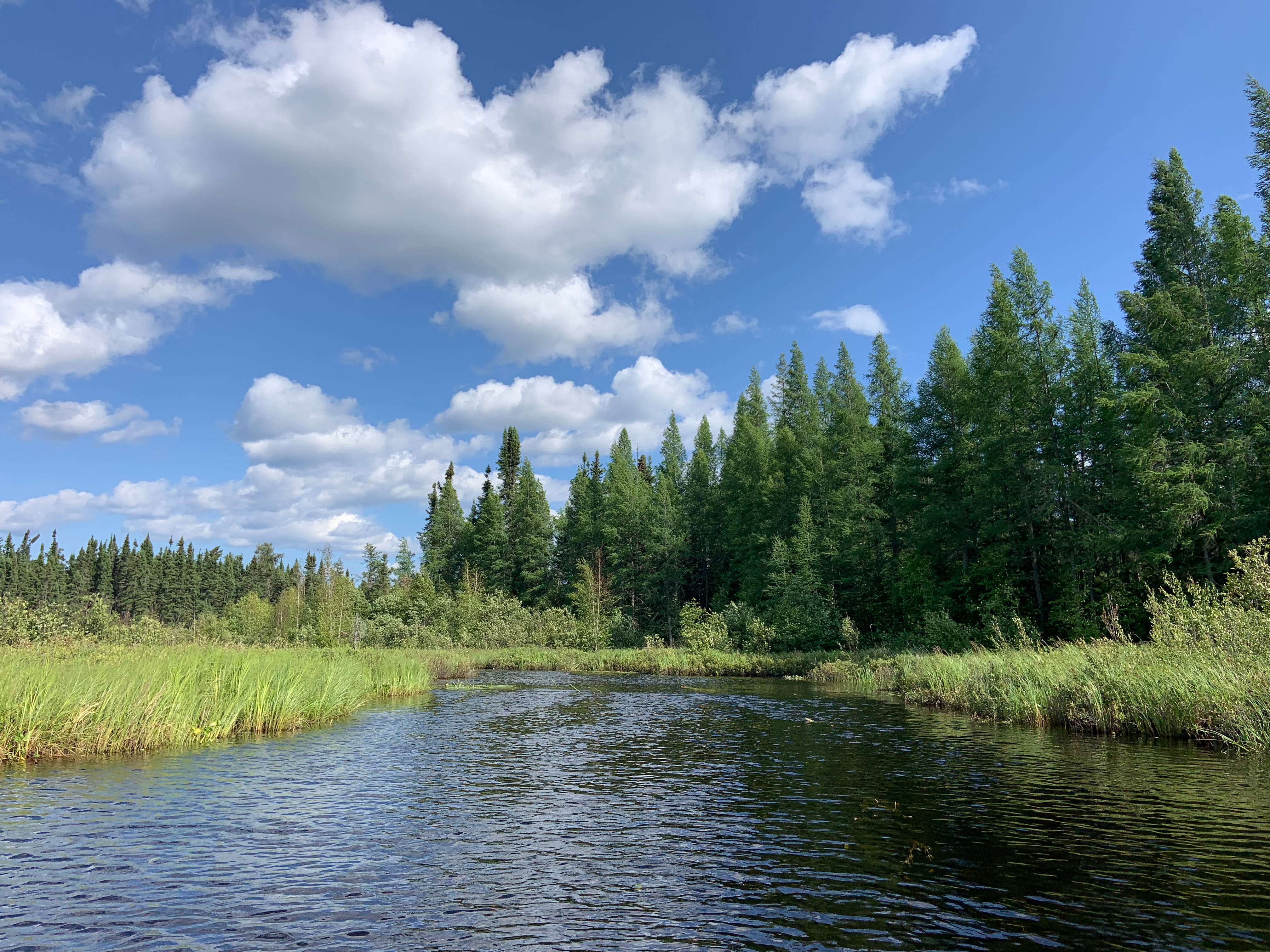
It was this unimposed character and budding intimacy that began to dissolve the loneliness in my soul. There is so much giving in this relationship. The trees grow towards the sky and turn the gifted sunlight into food that nourishes them. Two eagles tend to their young on a tall tree, one grabs an unlucky walleye that had risen to the surface of the lake. In its death, it gives the bird life. Grass and moss feed the moose as the moose feed the wolves, and in turn, the wolves feed the ground with their droppings, bringing life to more grass and moss. The circle that is familiar in biology textbooks is active here. And I am amidst it, amidst the Canadian boreal forest, the largest intact forest ecosystem remaining on the planet. No longer sheltered from the effects of this circle of life but now intimately aware and involved, connected to the land because I myself am terra animata—“animated earth”.
At every step of this process, I see a tender gardener. He is there planting every tree, giving flight to the eagle’s young, painting the sky, and singing over His garden. His creation responds with every breath of air they breathe. When I see the way He touches His creation, and the way His creation responds in wonder and adoration, I know I am known by Him.
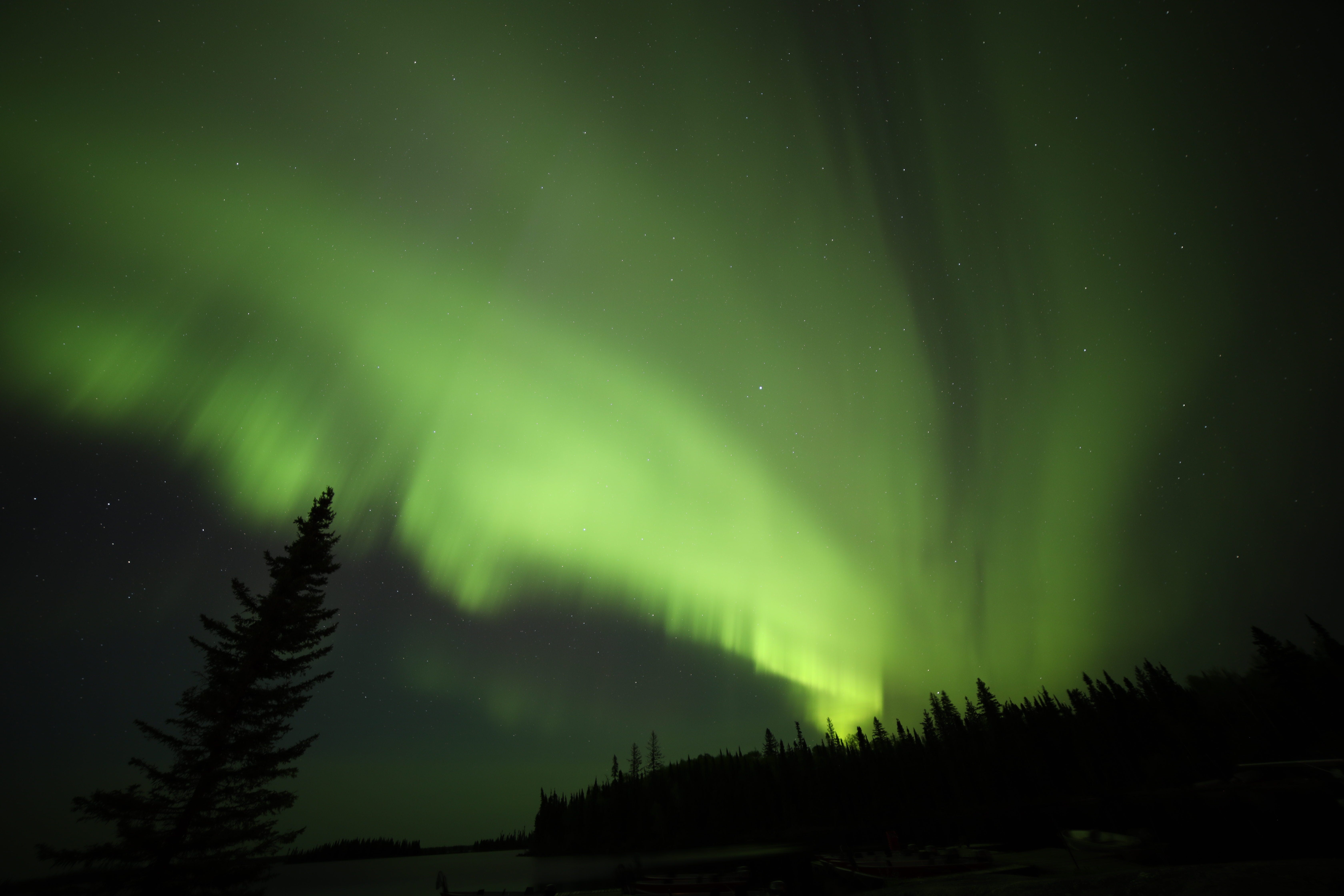
It’s quite scandalous, this longing for the wilderness—my wilderness. It pulls me from the walls of buildings, from the diligence of work, from the conversations of friends, and bids me be still. I fear disturbing the silence of His untouched temple, scared that one small breath would send ripples to the distant shore. Though I come to the cove on a boat, displacing creatures and making waves, I quickly turn the motor off, an apology for the sin of disruption. I stretch the time between coming and going, watching what I can only describe as a living art display, an experience movie producers can only dream of creating. In the moment, often it seems as if nothing visible is happening but with more time spent, the opportunity to adore grows. It is not one single taste but the culmination of experiences that root me to the land. Like a relationship, there are memorable moments but a true friendship isn’t kept for the highlights, but for the person itself. Here in the wilderness, in this relationship, I participate in the life of God by enjoying. Though fear can still be present, it is overwhelmed by the song of both creation praising and Creator loving. And there is no fear in this song.
This is really beautiful and profound, Grace. I appreciate your discussion on wilderness: how it is a place of beauty and wonder, but also place where we don't get to decide the terms of our engagement with nature - a brilliant point you make. Also, the braver we are, the more the danger, is so true.
Stirring! The ecology principles intertwined with the spiritual musings made me smile. I enjoy very much the simple observations of our Fathers world